Monday, January 18, 2016

Week in Film #3: 1/11/16-1/17/16


Week in Film #3: 1/11/16-1/17/16

Film of the Week: Tangerine
   Year: 2015
   Director: Sean Baker

       I don't know if it's the best film of 2015, there is much I haven't seen, but it is likely the defining one. Topical, electric, and funny as hell, this is a fire starter picture, the kind of thing that is bound to inspire a generation of filmmakers to pick up a camera, in this case an iPhone, and capture the times and lives of the world around them. It talks about the streets, the pimps and prostitutes, and the rest on the margins of society. Remarkably, it does it without a judging lens, instead bringing us into the singular experience of people trying to survive on the outskirts, and instead of inspiring disgust or disapproval of honestly repelling lifestyles, it creates empathy and comradeship instead, making us identify and sympathize with people far removed from that of most viewers.

       It is a political film, but that isn't the best thing about it. The best thing is the characters and the situations they find themselves in. It may have heightened moments of drama and hilarity, but it never feels slapstick or goofy. It is able to maintain a realistic tone throughout, and the struggle seems real, along with the feelings, and of course the driving energy behind it. It's a comedy but it doesn't pull punches with the griminess of the streets and the hostility and brutality of a life spent working them. The characters here may initially come of as caricatures, but in they end they are rounded and three dimensional, and the audience has formed an attachment. These are real people with complicated feelings, and the director treats them as such, never exploiting them.

       This is the kind of film that is a clear snapshot of the times. The kind of thing likely to be buried in a time capsule so people in the future can see what was going on in the year of 2015. There were certainly bigger and arguably more important pictures, but this is the one that captures the time. With glamour and grime, sexual and gender awareness, and modern aesthetic and style, it is the document of today, as it documents today. Much like 2001: A Space Odyssey for 60s space fascination, or Rebel Without a Cause for 50s rebellious youth culture, this is about a time specific to now and issues that shine in the spotlight today.

   Rating: B+

The Rest: 

Red Desert
   Year: 1964
   Director: Michelangelo Antonioni

       If this is anything it is a beauty to look at. Industrialization and smoke excreting factories never looked so gorgeous and magnificent on film. The smoke itself pervades throughout the movie, and it is a powerful and striking metaphor for the main characters frame of mind. That and the use of out of focus lens really hammer home the psychological depths of our protagonist, and the way she moves across scorched and steaming vistas of industry and urban and natural architecture is poetic in its imagery. The movie is a state of mind, represented perfectly in its visuals and personified through its lead.

   Rating: B-

Man Bites Dog
   Year: 1992
   Director: Remy Belvaux, Andre Bonzel, Benoit Poelvoorde

       Early on, Ben, our resident serial killer, approaches two boys playing with a toy gun. He borrows the gun from the boys and playfully pretends to shoot them. Because of the previous scene, in which Ben brutally commits a cold blooded murder, this is absolutely terrifying. We as the audience know that the gun is a fake, but already having seen Ben as an incredibly dangerous and violent individual, there is a brief, horrifying moment where you think that he is going to blow this little kid away in broad daylight, right in front of the camera. It makes you flinch when you see it. This is, without a doubt, the blackest of pitch black comedies I've seen. Anything that features a scene where a family is murdered, including a young child, and still manages to pull off some humor, deserves some admiration in it's own right.

   Rating: B

My Man Godfrey
   Year: 1936
   Director: Gregory La Cava

       Considered by many to be the definitive screwball comedy, this is certainly a fun and care free excursion above anything else. In its dialogue and characters the humor is dead on throughout, with all of the performers giving pitch perfect portrayals all the best of the humor is in the delivery of the lines given to the actors. Everyone is great but the standout favorite for me is Alice Brady as the mother of the family, pretty much everything she says is performed just right so as to get a laugh, no matter how slight the joke. A light and easy affair well worth watching, and for those looking for something more a commentary on social class as well.

   Rating: B

Is the Man Who Is Tall Happy?
   Year: 2013
   Director: Michel Gondry

       Captivating and inventive cartoons help make complex philosophical ideas come to life. Not to say this isn't an interesting film, but it could have more going on. Essentially just an animation of a conversation, you can't help but wish there was more too it, something to add a little more meat on its bones. The conversation is indeed a fascinating one, and I couldn't say I was ever bored with it, but there is a feeling that it is just slightly lacking in its delivery, and it seems like there could have been something to give it more of a whole feeling. This would probably benefit from being much shorter, more like a half hour to forty five minute experiment rather than a feature.

   Rating: C-

We Need to Talk About Kevin
   Year: 2011
   Director: Lynne Ramsay

       This is hard edged and unforgiving, traumatic and caustic in its themes and delivery. No one is born evil, but sociopathy is certainly as close as one can come to being born that way. The movie asks a lot of interesting questions about love, and whether or not love can truly be unconditional. Tilda Swinton gives a powerful performance as the mother of her emotionally absent and immoral child. A dark and murderous character study of painful psychological plains and the dark corners of human nature.

   Rating: B

Fruitvale Station
   Year: 2013
   Director: Ryan Coogler

       This can be an emotionally merciless film, but it also an honest one. This is very much a document of the time, with the incredibly hot topic of unarmed black men being gunned down in the streets by police officers. It gives a face to a societal struggle and it humanizes the story of modern America. More than that though it is a rich character study, and is more than just its message, as all great movies should be. It makes Oscar a human being instead of another faceless martyr, and by building up with a day in the life it makes the climax that much more heat wrenching.

   Rating: B+

The Shooting
   Year: 1966
   Director: Monte Hellman

       An albeit unique western, it is also one that feels empty. That may have to do with the barrenness of the landscape, portrayed as desolate in a way I haven't often seen in the genre, but also it may have to do with the thinness of the plot and seemingly random and arbitrary aura of the film itself. The characters actions don't seem to make a lot of sense, and the the whole thing feels underwhelming and unnecessary. The director does a good job of characterizing the west though, making it a wasteland and a deathtrap instead of a place of hope, quite the opposite in fact.

   Rating: D+

Brief Encounter
   Year: 1945
   Director: David Lean

       I'm not usually the most romantic of movie goers, but something about the honesty of this picture really got to me. It doesn't fall into the usual classic Hollywood schmaltz, it feels organic and natural and real. There is a deep ache at the heart of this movie, and the narrator speaks with the kind of truth that isn't often found in romances. Yes it is a little sappy but it feels real is what it remarkable about it. When she talks about her feelings you feel them, and you sympathize and empathize because it connects with how love often goes in the real world: unrequited or cut too short. It's a movie about romance, but it's also a movie about life, and the lessons it teaches.

   Rating: A-

Death by Hanging
   Year: 1968
   Director: Nagisa Oshima

       What begins as a procedural depiction of Japans capital punishment system slowly but surely loses ever last one of its marbles in an absurd, comic perspective of the country's post-war socio-political climate. It does this through no more than a loophole in the execution process that causes moral dilemma and dark comedy. Being a straight on and blunt indictment of the country's treatment of Koreans, it savagely rips at the Japanese society of intolerance that influences the characters. I myself had stereotyped Japanese films as being a honed craft and one that is very controlled and precise. This however is unleashed, untamed and insanely inventive filmmaking.

   Rating: A-

Sunday, January 10, 2016

Week in Film #2: 1/4/16-1/10/16


Week in Film #2: 1/4/16-1/10/16


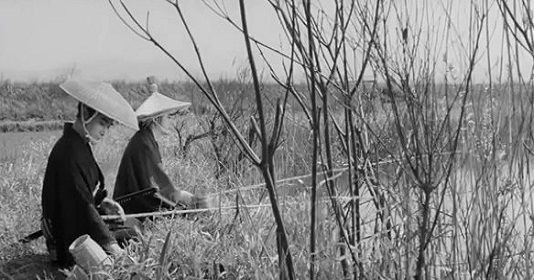
Film of the Week: Harakiri
   Year: 1962
   Director: Masaki Kobayashi

       Rarely is a film so meticulously crafted and perfected on all it's fronts in the way this is: cinematically, artistically, politically, emotionally, and in sheer entertainment. This is masterwork that with great style and mastery of the craft paints a picture of a hypocritical society and of great human suffering. No punches are pulled here, not emotionally and certainly not viscerally, as the harakiri that the title eludes to are ones that are grueling and gruesome in their depictions, as brutal as the story that features them.

       From the outset the movie grabs you and holds you in place, using story techniques such as flashback too entrance you and keep you captivated. The camera moves gracefully through rooms, often patient as it waits for its subjects to move, act, and speak. Once it has you that is when it begins to squeeze, like a snake coiling itself before entering in for the kill. The pacing is on point and it somehow is able to keep you enthralled in the mysteries of its characters, and the motives that would drive them to commit extremely bloody suicide. The final results are shocking and prosecuting of a system of honor that is inhumane and rotting from the inside out. It boldly not only challenges the foundation of much ancient Japanese culture, but completely rips the samurai code to shreds as it unravels corruption and moral decay with blood and tears.

       Its brutality is also beauty, as fountain sprays of blood paint themselves black against white material, making beauty out of violence. The whole film is impeccably shot and framed, with gorgeous cinematography that is elegant in its simplicity and haunting in its starkness. Empty spaces and still patience in the camerawork evoke feelings of emptiness and loss, as well as bottled aggression in its fight scenes when the camera tracks it's warriors battling to the death over honor and immoral moralities. The slashes pack a punch in raw and unrelenting agony as the players reveal their inner selves and bear heartache, shame, and desperation in painful and great performances that make a great movie even better. 

       There is a moment partway through the film in which the director cuts from the image of a man holding a child and singing to it, to the same man sitting solitary on a mat in a courtyard, prepared to commit ritualistic suicide. It's moments like this that show how cinema is an art form like no other. With a simple moving from one image to another, it can say profound truths without so much as a single word, and imply more pain than can be comprehended without showing so much as a single tear. This is beautiful, masterful, and transcendent filmmaking. In a single succession of two shots, the simplest thing, it creates a deep feeling of loss and shows the power of the moving picture, which is one that can express in ways that other art forms cannot. 

   Rating: A


The Rest:

Vivre sa vie
   Year: 1962
   Director: Jean-Luc Godard

       If there is one thing Godard has in spades, it's style. This film floats with ease across its scenes, the camera surprisingly versatile, resulting in some truly impressive shots. The story isn't exactly incredibly strong or potent, but thats hardly the point when the director is having so much fun experimenting cinematically. Like Breathless, this is about the ebb and flow of the piece, not really about the narrative. It's about feeling and expression, and it captures its mood well.

   Rating: B-

2 or 3 Things I Know About Her
   Year: 1967
   Director: Jean-Luc Godard

       In part two of my Jean-Luc Godard prostitutes women double feature, the director shows his change from light and snappy semi-social commentary to poetic, cosmic and half profound/half pretentious social commentary. The result of this effort is a mixed bag of sometimes engaging filmmaking methods, such as characters talking their thoughts out loud to the camera, and sometimes less so, like whispered rambling narration on something or rather about either society, consumerism, and capitalism, or the mystical meanings of words and life. This is a great philosophy type movie, and typically that works well for me, but the delivery wasn't up to scratch to match the ideas, despite some interesting cinematic techniques and effective moments.

   Rating: C

Investigation of a Citizen Above Suspicion
   Year: 1970
   Director: Elio Petri

       With a brilliant screenplay and a great central performance, this is one that takes you in with impressive and well situated shots and an engrossing and very well handled story. It's subject explores the idea of power as well as any film I've seen, and takes new directions and ideas while telling a gripping tale of anti-mystery and misplaced suspense. It's an odd, frankly lunatic premise that somehow comes across as realistic and not at all silly or unbelievable. This is near flawless, aside from the most annoying boinging score ever devised. Truly masterful study of power and the immunities of authority.

   Rating: B+

The Lady Vanishes
   Year: 1938
   Director: Alfred Hitchcock

       Quick-witted and intriguing early Hitchcock, his best of his early efforts as far as I can tell from what I've seen. Where the likes of Foreign Correspondent and The 39 Steps got bogged down in slightly boring narratives and conventional contrivances, this is very much an improvement, adding a very healthy dose of humor and a really engaging mystery to go along with it. The film is pretty much pure fun from beginning to end, and features one or two nail biting sequences that the director would master in his later achievements. A much more fully realized and entertaining British era Hitchcock than I had previously seen.

   Rating: B

Ossos
   Year: 1997
   Director: Pedro Costa

       This is tough viewing, and while beautifully framed and shot, not particularly rewarding or memorable in the long run. It is something to be drudged through, with incredible bleakness and deprivation that will leave you drained and depressed, and not all that enlightened, in fact mostly just tired. The best thing that can be said about the film is the cinematography, which is just absolutely gorgeous. With darkness and popping solid colors, it has a very unique look that creates a real sense of space and atmosphere, making poverty beautiful at times, apart from the painful realism of it, that is.

   Rating: C-

Lady Snowblood
   Year: 1973
   Director: Toshiya Fojita

       Sprayed with blood and drenched in gore, this is as artistic as mind blowingly brutal violent entertainment gets. It is also essentially the original Kill Bill, making that film look like less inspired by Lady Snowblood and more a near remake of it. Like a great Tarantino movie, this is bloody fun and stylized stylistic moviemaking that is designed for mostly the purpose of entertaining though revenge fantasy and extremely graphic depictions of violence.

   Rating: B


Blithe Spirit
   Year: 1945
   Director: David Lean

       Light and airy comedy that is entertaining enough but ultimately amounts to an only decent overall picture. There are some pretty good moments of comedy, and Margaret Rutherford is genuinely hilarious throughout, being the center and best thing about every scene she is in. The rest of the cast are serviceable, but mostly just okay, none really standing out more than the others. Thats how I'd describe the whole thing to be fair: serviceable, but mostly just okay.

   Rating: C-

Seven Samurai
   Year: 1954
   Director: Akira Kurosawa

       This is a near masterpiece, and would be if it weren't for the minor quibbles of being just a little too long and having some slight pacing issues. That aside this an epic adventure story told with a remarkable amount of humanity, and featuring outstanding performances, and terrific direction from the old master Kurosawa. The fight scenes are impressive to say the least, particularly the rain soaked finale. Most unexpected is how invested you become in the characters. The story draws you in deep into them and makes you care about the ones who die, creating a true feeling of sadness at such moments. Great movie, and one that has inspired many and who's influence continues to shine throughout cinema.

   Rating: A-

Tuesday, January 5, 2016

1001+ Albums: 1955

1001 Albums You Must Hear Before You Die, which is a book listing 1001 albums you must hear before you die, will be the subject of a series of periodical posts concerning listening to and reviewing the history of the album, from the 1950s to the present day. With each post being a separate year from 1955 to two-thousand-and-something, I'll be making this an ongoing series, updating when I've caught up on my list.

1001+ Albums: 1955


Album of the Year: In the Wee Small Hours by Frank Sinatra

       Just because it wins by default (only album of 1955 in the book) doesn't mean it's any less of a strong album. In the Wee Small Hours is as blue as it gets when it comes to love, with its wallows on that elusive thing often lost or unrequited. Sinatra's deep and crooning voice is able to evoke real sadness, even when it's matched with snicker-worthy lyrics (i.e. "my cigarette burns me, I wake with a start *dramatic horn blare*, my hand isn't hurt, but there's pain in my heart). Even these moments though, even if the writing is slightly funny, are effective and seem to somehow work.

       A schmaltzy yet heartfelt, and somewhat dramatic break up album, but one with the right amount of heart. This was also a major push forward for the idea of an album as a singular piece, an art form in it's own right, possibly the first concept album. Signature vocals from Sinatra, full of ache and longing, but still smooth are the best highlight. Best listened too after a loss of a lover, or a particularly potent case of unrequited love. Full of melancholia and good old blue feeling, more appropriately put, mood indigo.

   Best Track: What is This Thing Called Love? - There is a sense of real mystery in this one. Beautiful and pondering in a lovestruck musings sort of way.
   Worst Track: I See Your Face Before Me - Not particularly bad or anything, just kind of meh.
   Rating: B+

Sunday, January 3, 2016

Week in Film #1: 1/1/16-1/3/16


Week in Film #1: 1/1/16-1/3/16

Film of the Week: Holy Motors
 Year: 2012
 Director: Leos Carax

       Holy Motors is one hell of a convoluted, messy, confused, and brilliant piece of cinema. It pushes boundaries: both in coherency and in art. Its at once incredibly frustrating and possibly a masterpiece, maybe not even a flawed one, although maybe a deeply flawed one. What is it about? I really don't know. What I do know is that its captivating, beautiful, grotesque, uneasy, transcendent, and original, which are some of the most important things one looks for in great art.

       As far as I can draw from it, thats what the film is really about: art. Art, and specifically the art of performance. A man travels around Paris dressing up in different elaborate outfits, meeting "appointments", which usually involve him participating in some bizarre scenario or situation, sometimes erotic, sometimes musical, sometimes deadly, sometimes lots of things. The film is commentating on the absurdity of art, and the limits of it, or how far you can push it in other words. It might also be about the absurdity of life in general. The silly ways we behave, the seemingly random acts of violence, love, and other things that are committed everyday, all conveyed through performances echoing and enhancing the struggles of the real world.

       These "performances" range from biting peoples fingers off at fashion shoots to acting out the death of a loved one to someone the actor doesn't even know, in fact, another person who shares the same odd profession. Some of these scenes work beautifully, like for example the part where the protagonist (if you can call him that) dresses all in green and rampages through a graveyard eating flowers, the accordion/band sequence, or the "who were we" song sequence. Others do not, such as the cold blood murder of Theo, or the odd ending with chimpanzees that doesn't seem to make any sort of sense (not that any of it does). It's a mixed bag, but every individual item in said bag as it the very least interesting. I was never bored during it.

       When it comes down to it, it doesn't add up to any sort of conclusion or answer to the giant question mark that this film is, but I don't think that that's the point anyway. Maybe I just haven't thought it through all the way, or maybe I need to see it again, but I'm not entirely convinced there is a point at all. It could be that it's creating art for the sake of art, and thats why the actors, I guess you might call them in the story, perform the seemingly random acts of... well, randomness. For the sake of creating something, even if that something is nonsensical, and more than a little deranged.

   Rating: B+

The Rest:

Monty Python and the Holy Grail
   Year: 1975
   Director: Terry Gilliam and Terry Jones

       Quite simply one of the greatest comedies ever made. In that style of silliness that only Monty Python can perform, the film goes from hilarious scene to hilarious scene with disjointed narrative somehow brought together with fluid pacing and great direction and visual style. Absurdity and truly unique sense of comedy run through this, using bold and somehow magically effective techniques that seem like they should derail the film, but somehow just make it that much more funny and entertaining. There is not one joke that falls flat here, and the entirety of it is essentially quotable from beginning to end. This is one of the truly great comedic masterpieces, a rare broad comedy that transcends its genre and becomes a great movie in and of itself.

   Rating: A

Love and Mercy
   Year: 2015
   Director: Bill Pohlad

       More than just your ordinary bog standard biopic, this film captures Brian Wilson's painful and brilliant life with a more interesting viewpoint, and real artistic style, as opposed to the usual formulaic route these films tend to take. Pohlad wisely decides to focus on Wilson's story instead of the Beach Boys story, and therefore is able to bring into understanding the mans vision and musical genius, as well as create a powerful and effective character study of a deeply troubled man. Dano does a good job portraying Wilson as a troubled, sensitive, tender human being, as does Cusack, although it must be said not as deeply or as effectively as his younger form. While not quite a revolution, definitely a breath of fresh air for biopics.

   Rating: B


The Times of Harvey Milk
   Year: 1984
   Director: Rob Epstein

       A classic documentary that brings profound feeling to the life and impact of Harvey Milk. Using insightful interviews and archival footage, this film takes us into the politics and atmosphere of the time. The most surprising thing about the film is the emotional heft that the film is able to conjure, and the impact it has on the viewer. It is also interesting to draw parallels to today, and how much better things are as well has how little change there has been in some regards. A thoughtful and well made documentary.

   Rating: B


Dope
   Year: 2015
   Director: Rick Famuyiwa

       With an electricity and vibrancy that is hard to capture, Dope is another take on that classic archetypal story: the coming of age tale. This, however, is also a commentary on race and class in modern America, as well as an honest look at youth culture and what it's like growing up in poverty stricken conditions. I was surprised to see things such as regular searches of schools and a metal detector at the front door of them as well. The young cast in this does a good job, and all three main leads show promise. Well done new take on the genre.

   Rating: C+

The Double Life of Veronique
   Year: 1991
   Director: Krzysztof Kieslowski

       Kieslowski is a filmmaker obsessed with chance and fate, and it has never taken more center stage than in this film. Shrouded in mystery and surrounded by an air of magical surrealism, it holds a fairy tale aura about it, or maybe more like one of a dream. It's beautiful in many ways, and the most notable is the gorgeous green and gold tinted cinematography. Kieslowski's films, especially the later ones, have rich color pallets, and utilize bold, stand out hues to express emotion and give an amazing look to his films. The shot compositions too are often simply amazing and frame things in such a way that it tells the story itself, and helps fill in the many blanks this film has (not a criticism). Finally, there is Irene Jacob, who is just as good in this as she was in another Kieslowski film, Red, possibly even better. Deep in mystery and full of beauty.

   Rating: A-

The Tale of Zatoichi
   Year: 1962
   Director: Kenji Misumi

       An exciting and surprisingly emotional first chapter in the 20 plus entry long filmic saga of Zatoichi, the blind swordsman. I had seen this before, but revisiting it to kick off a marathon of every film in the series, I was reminded of just how well made and especially well shot and performed this was. The black and white cinematography is often stunning, with more than a couple of great shots. The action is well thought out too, all fast and explosive. What really took me off guard though was the emotional power of some scenes, particularly the final sword fight on the bridge. Shintaro Katsu is very good as the titular character, and leaves you anticipating seeing more from him as the series continues.

   Rating: B+

Following
   Year: 1998
   Director: Christopher Nolan

       I guess that's why you shouldn't follow people. A neo-noir that is very clearly influenced by it's predecessors with all the usual trapping: femme fatale, black and white photography, etc. I found this enjoyable and well made, but not particularly new or too inventive, apart from the interesting use of non-linear narrative. Overall middle of the road. Good but nothing to write home about. Nolan's best work is still yet to come.

   Rating: C+

Thursday, December 31, 2015

2015: Top Ten Films I Saw for the First Time


2015: Top Ten Films I Saw for the First Time


       After a years long absence, I have decided to come back to my "book to film" blog and start practicing my writing again. What better way to return than to post about the ten best films I saw this year that I had never seen before. This is meant to be the first in more regular posts, hopefully being a weekly update on the films I saw in each given week going forward indefinitely. So here you go, for the two, maybe three people that will probably read this.

10. Crumb
    Year: 1994
    Director: Terry Zwigoff

       With a depth and understanding that most documentaries can only dream of, Terry Zwigoff explores the life and mind of cartoonist Robert Crumb: a man with deeply haunted psychological depths. This portrait of an idiosyncratic artist whose work depicted the underbelly of American society with wit and truth. It is possibly one of the greatest documentaries, and certainly a very insightful and fascinating character study.
  

9. On the Waterfront
     Year: 1954
     Director: Elia Kazan

       And thus, acting was forever changed by Marlon Brando, as directed by Elia Kazan. This is a film remarkable for its impressive and revolutionary performance, but it should not be allowed to have that overshadow the rest of the film itself, which is also beautiful and a masterpiece in it’s own right. A rousing, sorrowful, and hopeful tale of union and doing the right thing, even in the face of great adversary.
  
8. Persona
      Year: 1966
       Director: Ingmar Bergman

       Acting is the art performance. An actress must take something from inside and project it into their mind and onto their body to convey and provoke certain emotions. That is also the job of the director, only instead of using their voice and body they use the camera. In Persona, both these tools are broken and reshaped into something cinema had not seen before. The result is a brilliant, haunting masterpiece.

   
7. Don't Look Now
      Year: 1973
       Director: Nicolas Roeg
   
       Love and death in Venice never was so dark and intriguing, albeit going off an honestly limited knowledge of that very specific topic. None the less Don’t Look Now is a masterclass in suspense and features some of the best editing ever to grace the screen, with great direction, score, and performances from Sutherland and Christie. One of the greatest horror films of all time. Deeply mysterious and deadly evocative
   
6. Uncle Boonmee Who Can Recall His Past Lives
     Year: 2010
      Director: Apichatpong Weerasethakul

      Boonmee is haunted by ghosts of former lives, as the film itself is haunted by the ghosts of Weerasethakul’s previous meditations on life and nature. It’s a beautiful, rich, dark, and magical experience, which is easily the directors best effort. Like the echoes of past lives it stays with you long after it’s over, residing in you like the spirits that watch over Uncle Boonmee in his final days in this world.

5. Picnic at Hanging Rock
       Year: 1975
       Director: Peter Weir

       Deep in the heart of hanging rock there are impenetrable mysteries; mysteries of unknown pleasures and dangers and understandings not yet discovered by the young women who get lost there. It’s a film of elusiveness and mysticism, with an always out of reach/out of sight truth just beyond the next corner and crag of the rock and of the movie. It’s beautiful and haunting and unknowable.

4. Raging Bull
      Year: 1980
      Director: Martin Scorsese

       In Rocky, you’re in the audience, cheering for the hero, believing in him. In Raging Bull, you’re in the ring, and you feel the hits, and each one hurts with searing pain. This film is an amazing achievement in direction, cinematography, acting, and it’s one of the most visceral, painful films I’ve seen. When Balboa wins, you feel release of emotion. When LaMotta wins, you feel relief from the pain.

3. The Big City
      Year: 1963
      Director: Satyajit Ray

       Going in, I didn’t expect how reverberating and powerful this film would be. In Ray’s gentle touch there is so much beauty and emotion that can be expressed, in ways that isn’t captured when the emotions are overblown and fake. Its also very brave and progressive in its depiction of a house wife leaving home and working to support her family in India. An amazing performance from Madhabi Mukherjee.

2. Nashville
      Year: 1975
      Director: Robert Altman

      I don’t even like country music, but something about this film, which is very much steeped in country and the surrounding culture, had me almost immediately and kept me transfixed and awe inspired right up until the final, beautiful, climactic performance. This is one of those movies you see where you don’t necessarily know why it had such a big impact on you, but you immediately recognize as a masterpiece.

1. Fanny and Alexander
      Year: 1982
      Director: Ingmar Bergman

       There are few films that attempt to bring such huge scope and depth to the screen, and fewer that pull it off as masterfully as this. It was originally intended to be Bergman’s final film, and if it ended up being so I can’t think of a better way to end a career. The film captures all of life, birth to death, and a possible afterlife. It knows how to see the world through the eyes of the very young and the very old.

Tuesday, December 2, 2014

Book to Film: The Thirty-Nine Steps


Book to Film:
The Thirty-Nine Steps


         The Thirty-Nine steps is the slim 1915 novel by John Buchan about a man on the run for a crime he didn't commit, hiding from the law and a secret organization of spies. You can easily read that and mistake it for a summary of over half of Alfred Hitchcock's filmography. It's not hard to see the famed film maker being drawn to this. Its' basically a novel version of a Hitchcock movie before Hitchcock was making movies. His version isn't the only version though, and while there have been others, I will only be focusing on the aforementioned film and one other - the 1978 version directed by Don Sharp. It's a tale of exciting action and twists and turns, with charismatic characters and mysteries in need of unravelling, chiefly among them being: what are the thirty nine steps?

The Book

         In the book, the answer to the question is simply the number of steps outside the main headquarters of the organization that has been pursuing the main protagonist. That main protagonist is Richard Hannay, a man just returning home from a long stay in Africa, who is miraculously swept up into a big conspiracy. He is framed for the murder of man in his flat and has to go on the run across Scotland to escape the police chasing him, as well as a secret organization that the man in the flat told him about before he was assassinated. Its a very fun book, but that's about it. The character has interesting, episodic adventures before solving the final mystery in a sort of anti-climax. It's definitely worth reading, but it simply isn't on the level of other great books I've read this year, like To Kill a Mockingbird or All Quiet on the Western Front. It can't even be considered among books I didn't really enjoy, like Dracula or Wuthering Heights just because those did do more things and were at least sort of impressive.

The 1935 Film

         The 39 Steps in the Hitchcock film actually refers to the organization instead of some stairs outside a guy's house. This also isn't the only thing different from the book in the movie. The two share pretty much the basic summary and then the film wildly deviates from the original text. There is an added love interest and the ending is completely changed, along with mostly all of the story before it. It is though, better than the book, having essentially the same spirit, only adding gorgeous photography and a fun central performance from Robert Donat. There's also much more substance here overall and a much more interesting finale involving a man who can remember millions of facts (most of them useless) and simply can not help answering any question he is asked, especially ones that completely throw light on to the super secret organization he is trying to protect.

The 1978 Film

         The 39 Steps in this version are the ones that are inside of the giant clock tower Big Ben in London. This leads to probably the best finale of these three stories, involving Hannay hanging from the hands of the clock. Hannay in this version is played by Robert Powell, giving my favorite performance from the two movies. In this version there is also an added love interest and much of the plot is changed, but it bears possibly more resemblance to the book, but only slightly. It is again also very well shot, giving off a sort of Hammer feel at times, especially the scenes in London. It's not quite as good as the 1935 movie, but it's just as fun as that one.

Conclusion

          In the end, I think the Hitchcock film is the definitive Thirty-Nine Steps. All three are enjoyable, but this version has the best combination of story, visuals, and characters to make it the classic it is viewed as. The best Hannay is Powell, as well as the best climax being in that film, and the book was a fun and breezy read but the Hitchcock film is the best story.

The Book - 7/10
The 1935 Film - 9/10
The 1978 Film - 7.5/10

Sunday, November 2, 2014

Book to Film: Dracula


Book to Film:
Dracula

       Dracula is one of the most well known and influential characters in all of literature. In fact, he is so well known he is probably the most recognizable literary ever, arguably more so than say Robin Hood, or Sherlock Holmes. He was the titular character of the original, and some say definitive vampire tale, and without him we wouldn't have any stories of blood sucking creatures of the night, from Buffy the Vampire Slayer to Twilight. He has appeared in hundreds of films, and has been used and interpreted to the point of parody. He has become so buried in countless adaptations and retellings that he has become somewhat a joke. Where the character has fallen the idea has prevailed: one of a ageless undying creature that feeds off the blood of the innocent in the night. 

       After reading Bram Stoker's Dracula, I watched six adaptations of adaptations of the story. They are F.W. Murnau's 1922 silent classic Nosferatu, the 1931 Dracula starring Bela Lugosi (with added score), Hammer Horrors 1958 Horror of Dracula, both 1979 versions, being a remake of the original Nosferatu directed by Werner Herzog and a new adaptation starring Frank Langela, and finally Francis Ford Coppola's Bram Stokers Dracula from 1992. In this essay I will exam these versions of the story and find the best of different aspects of the book, as well as what each added to the Dracula mythology. 

   Faithfulness to the Book
         
       The version that most faithfully follows the book is probably the 1992 film Bram Stokers Dracula. Its the only version with pretty much every character intact, doing what they did in the novel. There are a few changes, like the entire opening explaining the vampires origins, and the relationship between Mina and Dracula is completely overblown. Overall though the plot is the most similar to the novel. After that the silent film, the Bella Lugosi version, and Herzog's are sort of accurate, changing mostly characters and endings, aside from the Nosferatu's which change location and add more plague. The Langela and Hammer versions change the book so much it seems like they heard the story second hand, decided to add, take away, and change whatever they wanted, and were given a list of character names that doesn't explain there relationships at all. 

   The Vampire

       There are six actors in these films that all managed to create their own unique takes on the character. Every version has its own thing about it that was either great or added to the characters identity as it went through its many film adaptations. Bela Lugosi's Dracula is probably the most popular. Its the performance that made the character famous outside of literature, but it seems a little stilted today (can't really blame Lugosi, English wasn't his first language). There is still much to admire about him though, he has great moments, like his "children of the night" line that would be used in all adaptations going forward, and he definitely looks the part. The later performance most reminiscent of Bela's is Frank Langela, playing a more sexed up and suckier Lugosi (no pun intended).

     The most like the Dracula in the book is probably Mac Schreck's Count Orlock. He earns this spot purely for being nothing but a monster, as he was in the book. If its not him it might be Christopher Lee's portrayal, as in that one, Dracula is seen to be a pure evil, not like the romantic figure he is often shown as. Another thing these two have in common is that they are probably the most frightening. Schreck just looks extremely creepy, being closest to what an actual vampire would look like, save maybe Klaus Kinski. Lee at first doesn't seem like he will be all that scary, he does have a presence and authority about him, but he is also calm and relaxed. Then there is a point where he loses it and his eyes go all blood shot, and you cant help but be slightly terrified. He's the one you least want to piss off. Where the others are scary (or not scary) in a slow, creeping way like a spider, Lee goes vicious like a wolf.

       Klaus Kinski is probably the most interesting take on the character. Instead of going the romantic suave route, or the completely evil monster, he plays this weird scary looking outcast, who seems to be genuinely looking for some sort of connection. The problem for him being instead of being a handsome brooding Langela, he's a bat-like, freakish Max Schreck. It's an interesting move, making him be out looking for love and also be the monster. At the sight of blood he acts like a drug addict who can't resist the temptation. He's like the Nosferatu in the silent film, only with slight shades of humanity underneath the pale, alien exterior. As for the actual performance, it usually works, but every now and again he comes off as sometimes hilariously whiney, like his swatting away of Renfield, or his rather pathetic reaction to Mina warding him off with a cross. Along with Schreck he's definitely the most vampire looking Dracula, and the most animal like.

       All of these are takes on a character that can be interpreted many different ways, but I feel every variation comes together to form what I imagine should be the definitive count: Gary Oldman in Bram Stokers Dracula. Now this isn't necessarily my favorite performance, or the best, but it is the one that brings all traits of everything that came before it into a single whole. He has the monster like look of Schreck matched with unwanted outcast of society Kinski brought in the scenes at the castle. He has the ferociousness of Lee in his battle scenes at the beginning, he has the suave nature of Lugosi, and the sexuality Langela brought to the roll. He also does bring his own brand of terror to his performance as in scenes where he becomes the Wolfman somehow, or when he's threatening Harker as an old man protecting family pride.

   Supporting Characters

       There are a few supporting characters of any real consequence: Dr. Van Helsing, Mina Murray, Jonathan Harker, John Seward, Lucy Westenra, and Renfield. In the book there are also the likes of Quincy Morris and Arthur Holmwood, but in most of the films they either don't even appear or are minor inconsequential elements of the story. Jonathan Harker is the first character we meet in the novel and most of the films. He is Mina's fiance and travels to castle Dracula to sell the count housing in London. There isn't necessarily a stand out Harker among the films (except for Dwight Frye who sort of plays him at the beginning, but he will be talked more of), but the best out of these rather unnoticeable performances is probably John Van Eyssen for being very just ok. Dr. Seward is usually a bit more interesting, but not all that much. The best of these is probably Richard E. Grant, playing bumbling, clumsy Richard E. Grant well.

       One of the most confusing parts of the movies are keeping Mina and Lucy straight. For some odd reason the writers love to switch there names around. Usually if this hasn't happened then there characters have been combined. The performances that stand out best among them is the two from Bram Stoker's Dracula. Both Winona Ryder and Sadie Frost carve out distinct characters and give reasonably memorable performances. Isabelle Adjani is also pretty good as Lucy (but really Mina) in the Nosferatu remake.

      The second most iconic character in the story after Dracula is his arch-nemesis of sorts, Dr. Abraham Van Helsing. There are many different takes on this character throughout the film, from the old and wise Anthony Hopkins in the Coppola film, to the old and senile Walter Ladengast in the Herzog film. Over all of these my favorite though is Peter Cushing in the hammer horror version. He has a presence and performance style thats captivating. There is also the nostalgic factor which might have somewhat played in. If there is a third iconic character it would probably be Renfield, played on different wavelengths of crazy in nearly all the films. The best of these, as mentioned before, is Dwight Frye in the 1931 movie. He is truly unsettling after he's been driven into madness and worship of count Dracula. He probably gives the best performance in that version.

   Mood and Imagery

       When it comes to mood and imagery, surprisingly, every one of the films has something unique to the table. Firstly, there is Nosferatu, deemed one of the silent eras masterpieces. The image of Max Schreck looking down into the hold of a ship sticks with you, as does all the creepy shadow play. It gives of more of a quiet dread, or it tries to, often not quite due to unintentional humor. Next is the Bela Lugosi version, which is probably the most surprising here. It hold a very atmospheric mood throughout the entire film, and has some very impressive imagery. The massive interiors of the castle and the high level of detail definitely make an impression. The Horror of Dracula also has a unique sort of visual style that can only truly be described as Hammer. The mood in the version isn't as strong or atmospheric, but there are plenty of moments to give little jolts of terror, most all of which delivered by Christopher Lee. Next is the Langela version which is a failure in my mind. It all feels very fake and overly theatrical, and none of it really worked for me. The Herzog film has the most interesting blend of feeling and images. From the scenes of Harker going up the mountain to the rat infested plague scenes there is an erie, otherworldly feeling to the film. A feeling of discovering something cold and evil in the unknown of distant mountains. The plague party scene in the courtyard of the town is a highlight. Finally there is the Coppola version, which is arguably the best when it comes down to these things. It has a very doom-ridden feeling, with impressive visuals, like the battle in the beginning, or the chase through the mountains.

   Verdict and Ranking

       There is no doubt that Dracula is a classic tale that created the vampire mythos, spawning all sorts of other narratives and ideas. When it comes down to the actual book I don't really think it should be given the classic status. Its legacy much outweighs the original novel, which is pretty much dull to be honest (although I'm sure it downright terrified the more innocent Victorian readers of the times). Its films are almost collectively better than the book, some of which are just nearly great.

The Book: 6/10

The Films:

- Bram Stokers Dracula: 8.5/10
- Nosferatu the Vampyre: 8/10
- Dracula (1931): 8/10
- The Horror of Dracula: 7/10
- Nosferatu: A Symphony of Horror: 6/10
- Dracula (1979): 4/10